
Dear Church, Avoid AI Art

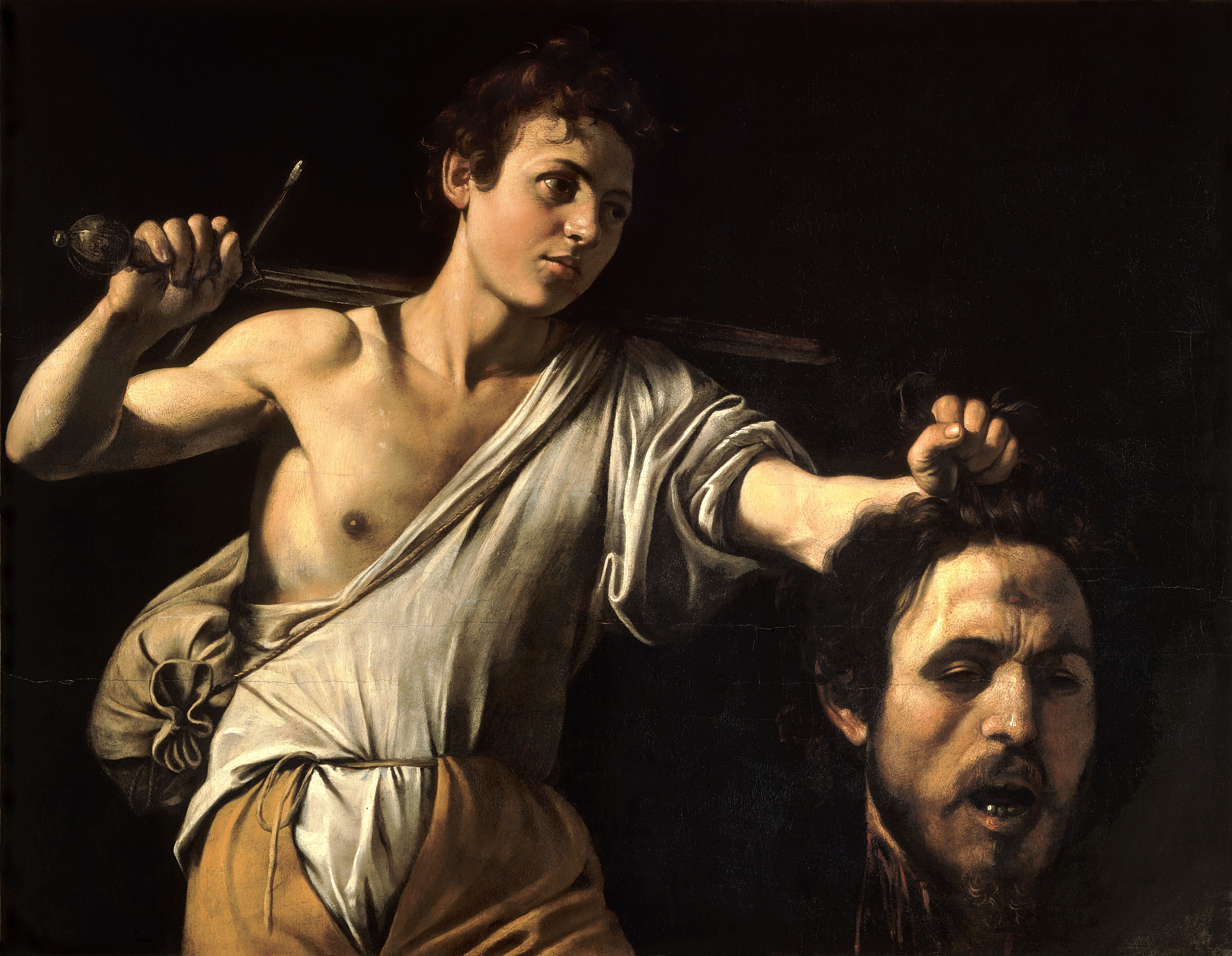
In February of 2025, Amazon Prime, in association with The WONDER Project, Lionsgate, and a grab bag of other studios, produced the show House of David, documenting the life and conquest of the king who walked with God.
Christian media has been through the wringer over the last several decades, as Christians have repeatedly struggled to find a foothold in an industry so hyper-focused on innovation and progress, where many Christian artists have struggled to break free of the wunderbread story of “Christian good, Athiest bad.” There have been exceptions to this, of course. Angel Studios’ The Chosen broke into the popular view in 2017 with a spectacular first season and has continued to rally support from thousands of financial backers, including an impressive $40 million theatrical run for their newest season. This has seemingly motivated Christian creatives to pursue other Biblical narratives, most recently emerging in the aforementioned House of David.
I will admit that my curiosity was piqued. Due to Christian media’s track record, I would not blame a secular audience for rolling their eyes at this new show, which portrays itself as a large-scale, Christian version of Game of Thrones, but, having read the history of King David in the books of Samuel & Chronicles, I am rather amused by the concept. The narrative of King David is filled with deception, betrayal, violence, revenge, death, suffering, heroism, and narratives so rich that they still are imbued in culture in the year 2025. Luke Skywalker is David, the Empire is Goliath. Few stories are more primed for dramatic explosion than David’s reign in Israel.
I dove into House of David as skeptical, yet interested. I was hopeful that I would be watching some Christian media that wasn’t pretending to be something it isn’t; something with the unique vision of an artist behind it. After all, at the end of the day, all art we make is to honor God.
"Whatever you do, work at it with all your heart, as working for the Lord and not for human masters, knowing that you will receive an inheritance from the Lord as your reward. You are serving the Lord Christ."
House of David has massive teams of creative individuals behind it. They deserve recognition and respect. Cinematographers, editors, actors, and more. Making a film or high-budget show is incredibly difficult, and those involved should be proud of what they accomplished.
And then episode six rolled around.
What had been a fairly enjoyable show opened its half-a-dozenth episode with a dramatic recreation of the birth of Goliath. Pardoning the Biblical questions behind the scene, which depicts Goliath as a Nephilim demonspawn of sorts (despite how difficult that is to ignore), I almost couldn’t believe my eyes while I watched what was clearly an extended sequence made entirely by generative AI. I turned off the show. I never turned it back on.
Dear Christian, I will not stand here now and proclaim AI art to be sinful or of the devil, nor will I subject you to a series of arguments regarding the fact that AI takes jobs away from hardworking artists, nor will I proclaim the reality that AI art purges and steals, without the filter of human intention, from countless artists and thoughtful creatives.
At the beginning of the Torah, Moses writes, “In the beginning, God created the heavens and the earth. The earth was without form and void, and darkness was over the face of the deep. And the Spirit of God was hovering over the face of the waters. And God said, “Let there be light,” and there was light. And God saw that the light was good.”
As a Christian creative, particularly as one in a creative industry that is very far from Christian, I think it is worthwhile to recognize the value and power that my individual voice has as an artist. This question is one that all must confront, at some point, no matter their belief system. Why am I making art? Some spin this question for profit. They create in order to get paid. Some create in order to accumulate fame and admiration. Many Christian creatives have taken the perspective that we should create in order to evangelize, which has led to the previously admonished “Christian good, Athiest bad” films of the early-2010s. The question of why permeates everything we do, but I believe that its answer is unequivocally necessary to provide purpose to our actions.
In Ephesians, Paul writes, "For we are God's workmanship, created in Christ Jesus for good works, which God prepared beforehand for us to do.”
I won’t stand here and proclaim, like many have, that we Christians must create art solely for evangelism. Not all stories must depict Jesus healing the blind and the lame, nor must every song be three-chord worship music, with three verses, a chorus, and a five-minute bridge. As a matter of fact, I deem it necessary and important to have media depicting the sins of this world, perhaps making the audience feel pain, confusion, hurt, or struggle as they are forced to confront the questions raised by a true artist within a broken world. The Shawshank Redemption, one of my personal favorite films, is not an easy watch, but if it were, it would not have succeeded in its pursuit. We don’t need to reflect the gospel in every story we make, endlessly retelling the same tale, but instead, we must use our intellect, creativity, and ingenuity to break down the white light of God into its rainbow of colors, and refract it, through the prism that is the imago dei within us, the image of God.
The true work of art is but a shadow of the divine perfection.
But how does this tie into generative artificial intelligence? I am making the claim that the art we make is intended to refract the image of God, projecting what is truly good, beautiful, and lovely. But I will elaborate on this. It is not the projection of the imago dei that inherently brings glory to God, but the act of refracting itself: the act of creation.
In the beginning, God created. We’re awestruck by stickmen drawn on cave walls 64,000 years ago. Why? Because, even then, the image of God is clear within us. It is the evidence of our unique nature; that as God created, so we too create. The true beauty in art comes from its creation. Art is not a teleological experience, focused purely on the ultimate outcome. That said, I do not blame many for being deceived into thinking it is so, particularly in a competitive industry like film and television, where the ultimate reward is capital. In the process of creation, we tap into the image of God within ourselves and utilize it by briefly elevating ourselves into mimicry, the highest form of flattery, as we create as God created. In that high moment of artistry, we are no longer men bound to this world, but we stand before the most high, in the throne room of the King, singing our praise through brush or pen or voice. We create. We worship.
This is good news! It means that your art honors God equally to that of Michelangelo, Steven Spielberg, and every other great artist who has graced the Earth. It is not a matter of outcome, but rather a state of being in a dance with creation.
Generative artificial intelligence bastardizes this. By viewing the final product as the objective goal of creation, this technology rouses an intense lust for creative yield that skips over refraction in favor of production. I remove my hands from the controls of creativity and lower myself from the throne room. Like Cain, I do not give the best of my labor, but offer merely that which is easy. Should I balk when God rejects it?
In an interview with Variety magazine, John Erwin, the co-creator of House of David said, “You can dream in real time and collaborate on the material much quicker. And so that enabled us to get through this scene in a couple weeks.” He suggests that the sequence might have otherwise taken “four or five months in a traditional process.”
If you’re not willing to bother putting time into creating it, why should I bother putting time into consuming it?
I turned off House of David and opened the book I am currently reading: J.R.R. Tolkien’s On Fairy Stories. In it, he writes the following poem and testament.
“Although now long estranged,
Man is not wholly lost nor wholly changed.
Dis-graced he may be, yet is not de-throned,
and keeps the rags of lordship once he owned:
Man, Sub-creator, the refracted Light
through whom is splintered from a single White
to many hues, and endlessly combined
in living shapes that move from mind to mind.
Though all the crannies of the world we filled
with Elves and Goblins, though we dared to build
Gods and their houses out of dark and light,
and sowed the seed of dragons- 'twas our right
(used or misused). That right has not decayed:
we make still by the law in which we're made.
Fantasy remains a human right: we make in our measure and in our derivative mode, because we are made: and not only made, but made in the image and likeness of a Maker.”
Dear Church, do not be tempted by the lips of the adulterous woman. Her lips drip honey; her speech is smoother than oil, but in the end she is bitter as gall, sharp as a double-edged sword. Her feet go down to death; her steps lead straight to the grave. She gives no thought to the way of life; her paths wander aimlessly, but she does not know it.
House of David is not a terrible show. It doesn’t deserve hate or scorn. And yet I taste the bitterness in my mouth, and I find it difficult to continue.
Perhaps my visceral reaction to the short AI scene in House of David was over-the-top, I admit it. But my revulsion is, I believe, well-founded. I do not wish to support art that pretends that a machine possesses the necessary divine spark to create as God does, nor do I appreciate the implication that, to do so, the machine poaches from real souls who dedicated their time, energy, and effort into making something beautiful.
To John Erwin, the rest of the House of David creative team, and to the worldwide Church, you are incredibly talented. Please, I beg you, continue to make amazing things, but please avoid falling into the trap that the outcome is the purpose. I believe it sets the wrong principle for artists around the world and sets a poor example for those who wish to honor God through their art. Handling the birth of Goliath practically may have been more difficult, more expensive, more time-consuming, and may not have looked as “cool,” but by skipping it, you skip over the beautiful purpose of your calling as an artist: to create.
“Enter by the narrow gate. For the gate is wide and the way is easy that leads to destruction, and those who enter by it are many. For the gate is narrow and the way is hard that leads to life, and those who find it are few.”
Art is not easy. Art is not quick. Art requires patience and endurance. Art is the fruit of contemplation and the shadow of the divine. Do not take shortcuts to beauty. God did not when he created you.